
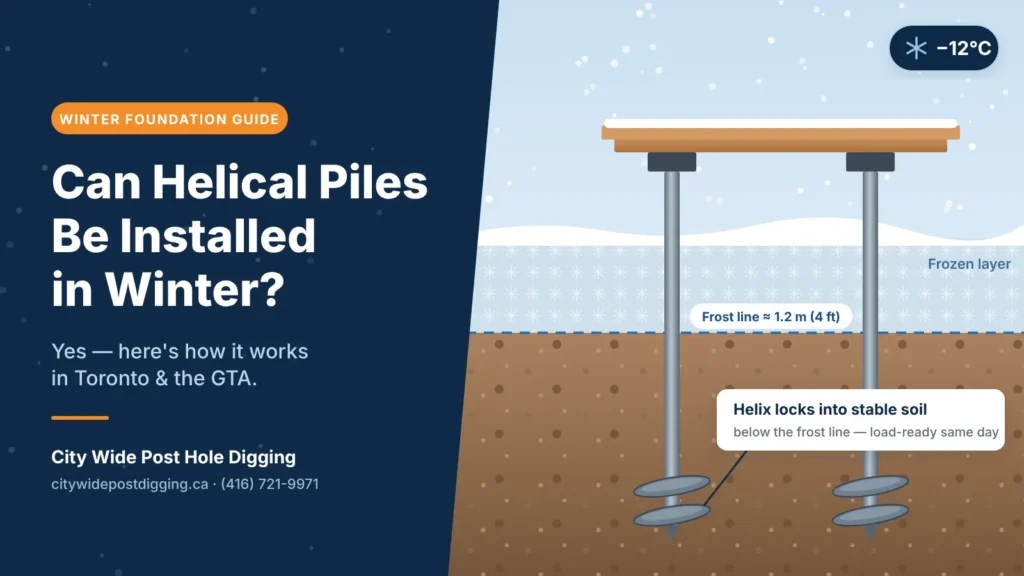
Yes, helical piles can be installed in winter, even when the ground is frozen. Concrete footings have to cure, but helical piles carry load as soon as they reach their target torque. That makes them one of the few deck and addition foundations you can put in during a Toronto winter without long delays.
If your contractor has told you to “wait until spring,” this guide explains when winter work makes sense, what changes on a cold job site, and when waiting really is the better call. At City Wide Post Hole Digging, we handle helical pile installation in Toronto and across the GTA all year round.
Why Concrete Footings Struggle in a Toronto Winter
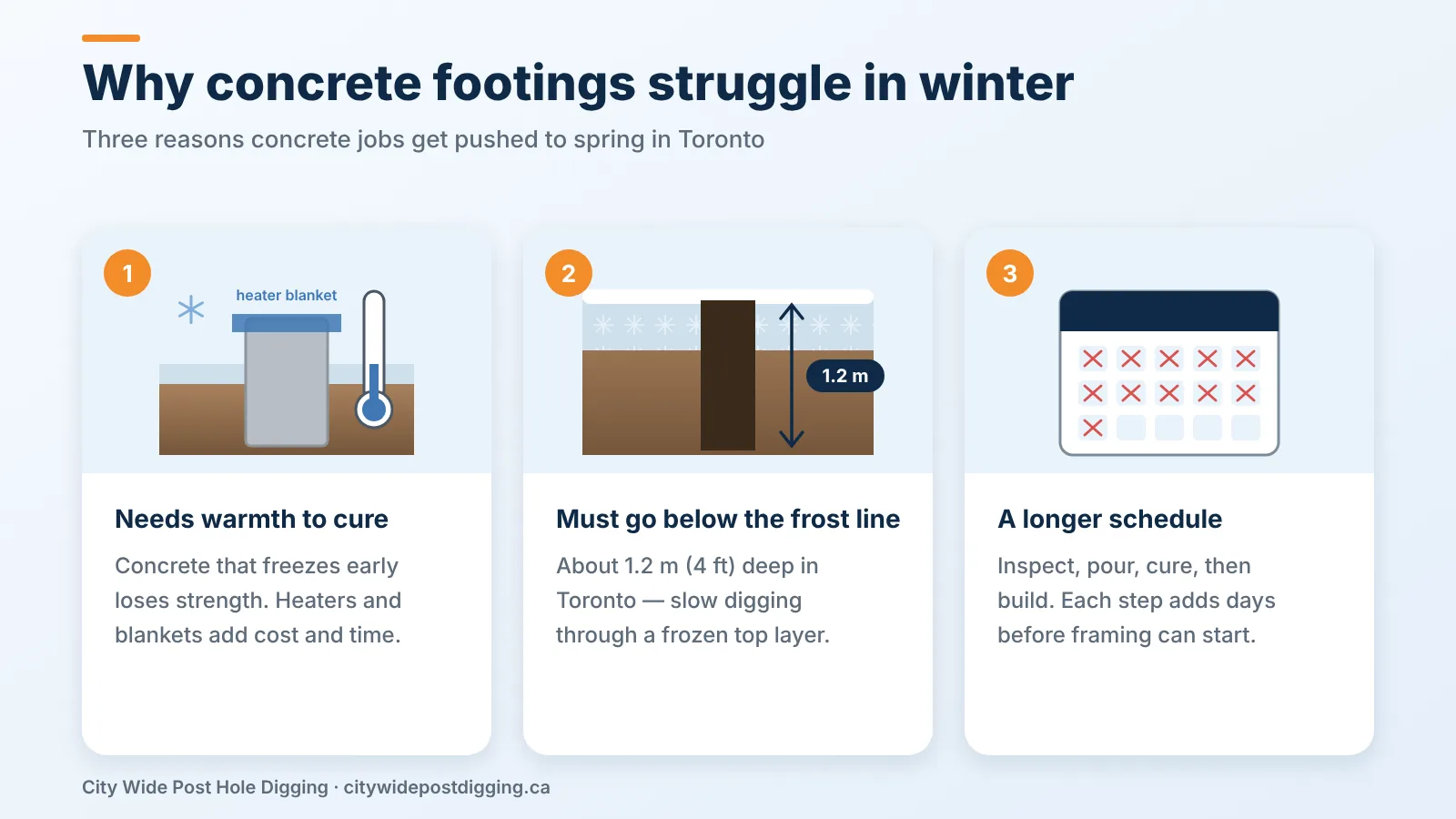
Concrete is a poor fit for winter work for three reasons.
- It needs warmth to cure. Fresh concrete that freezes early can lose much of its strength. In cold weather it has to be heated, blanketed or mixed with additives, and each of those adds cost and time.
- The holes have to go below the frost line. In Toronto that usually means at least 1.2 m (about 4 ft) deep. Digging that deep through a frozen top layer is slow, and the holes can fill with snow or water before the pour.
- Inspections and curing stretch the schedule. You wait for the hole inspection, then the pour, then the cure, before any framing can start.
The result is that many concrete footing jobs simply get pushed to spring. If your deck footings are already heaving or sinking, see our guide to deck footing problems in Toronto.
How Winter Helical Pile Installation Works
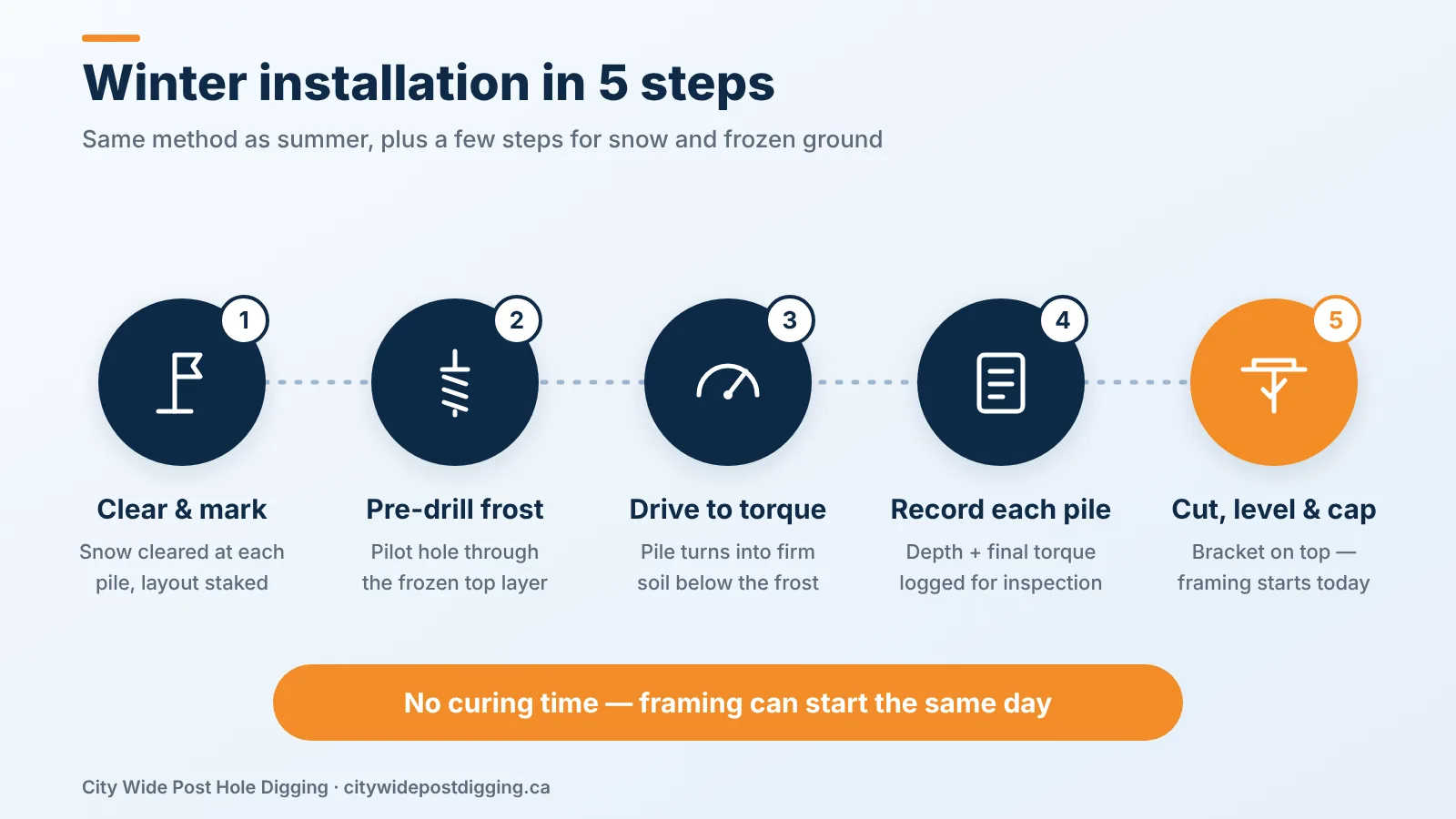
A winter install follows the same steps as a summer one, with a few extra steps for snow and frozen ground.
- Clear and mark the site. We clear snow from each pile location and mark the layout with stakes or spray paint, so the marks stay visible.
- Break through the frost layer. When the top layer is frozen hard, we pre-drill a small pilot hole through it. The pile then starts cleanly and stays plumb.
- Drive the pile to target torque. The hydraulic drive head turns the pile down into stable soil below the frost line. The installer watches the torque reading in real time, because torque shows how much load the pile can carry.
- Record each pile. We log the depth and final torque for every pile. That record goes to the engineer and the inspector.
- Cut, level and cap. Each pile is cut to height and fitted with a bracket. Framing can start the same day, because there is nothing to cure.
Most residential deck foundations take one day, in winter or summer. Want the basics first? Read what helical piles are and how they work.
Helical Piles vs Concrete Footings in Winter
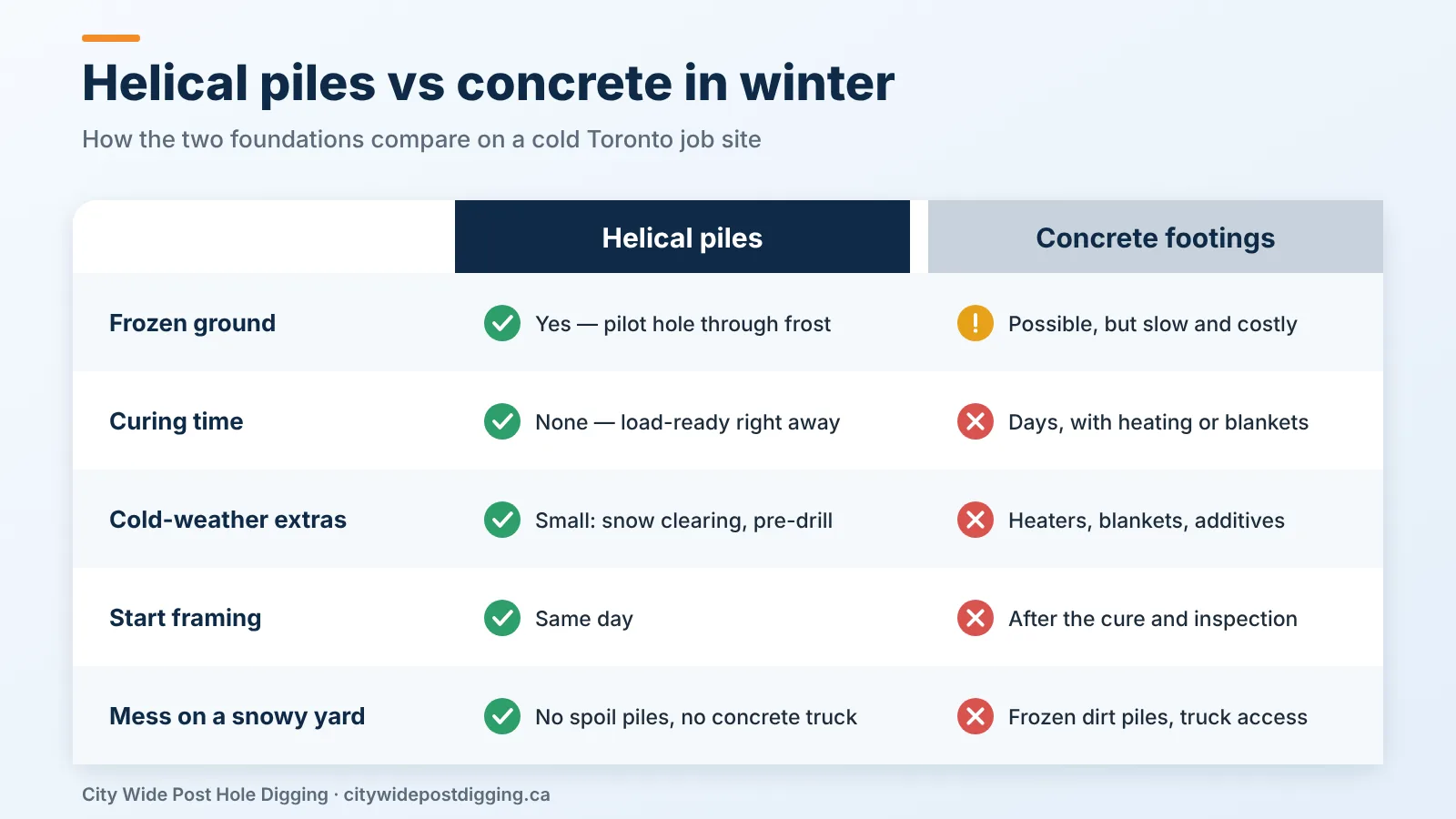
In winter, the biggest difference is time: helical piles are ready the same day, while concrete is often delayed for days or weeks.
| Helical piles (winter) | Concrete footings (winter) | |
|---|---|---|
| Can be installed in frozen ground | Yes, with a pilot hole through the frost layer | Possible, but slow and costly |
| Curing time | None, load-ready right away | Days, with heating or blankets |
| Extra cold-weather costs | Small (snow clearing, pre-drilling) | Heaters, blankets, additives, return visits |
| Start framing | Same day | After the cure and inspection |
| Mess on a snowy yard | Small: no spoil piles, no concrete truck | Dirt piles, frozen spoil, truck access |
| Frost heave risk | Low when the helix sits below the frost line | Higher if the depth or base is wrong |
For a full year-round comparison, including cost, see our helical pile cost guide for Toronto.
When Winter Installation Isn’t the Best Choice
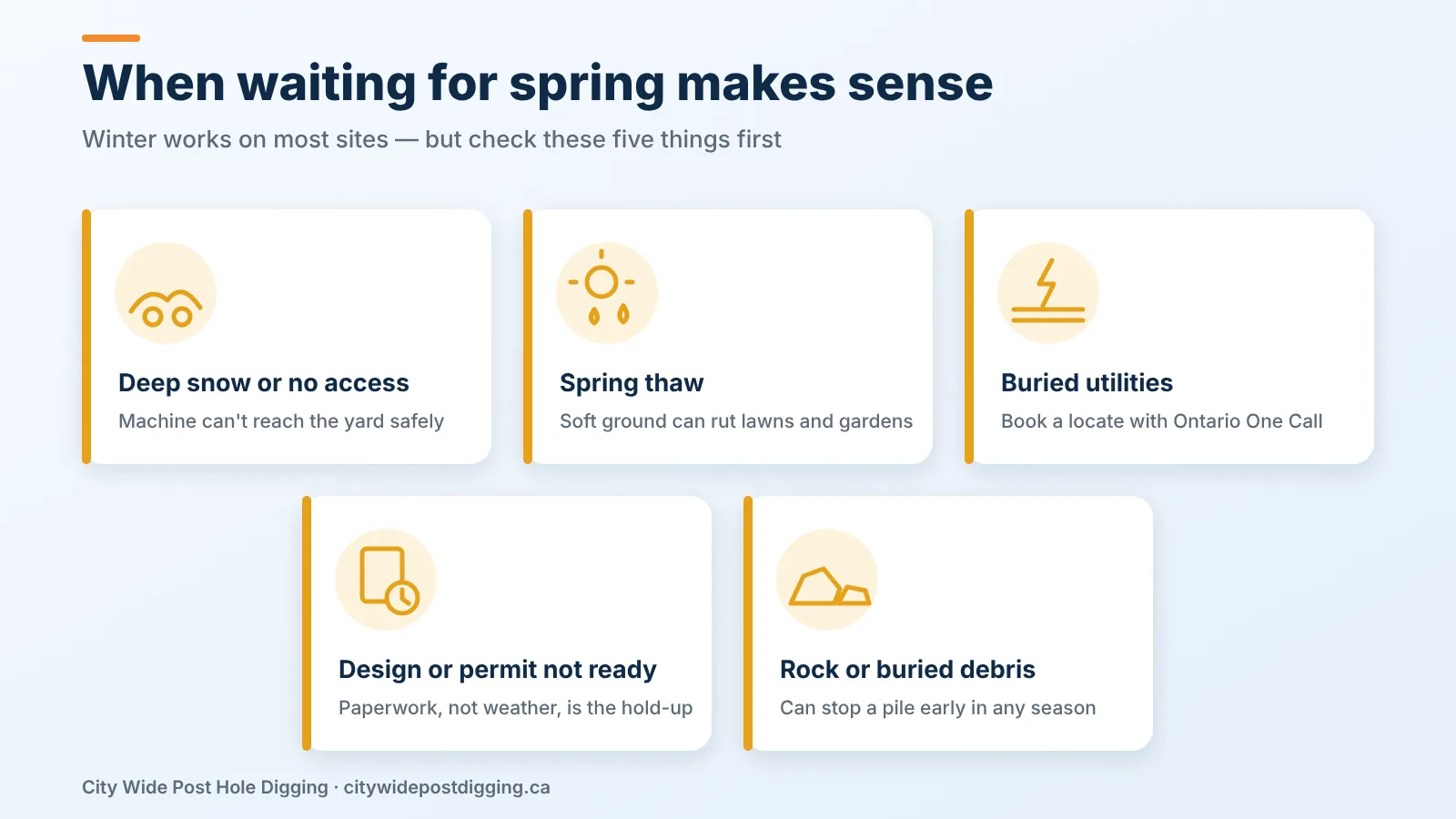
Winter installation works on most sites, but not all of them. We’ll tell you honestly if spring is the better choice.
- Deep snow or no machine access. If the equipment can’t reach the backyard safely over ice or deep snow, we may need extra clearing or a smaller machine, or the job may have to wait.
- Spring thaw. Late March and April can bring soft, saturated ground. It isn’t a problem for the piles, but heavy equipment can rut lawns and gardens.
- Buried utilities. Utility locates are still required in winter, and snow can hide markings. Always book a locate through Ontario One Call before any foundation work.
- Engineering or permit delays. If your design or permit isn’t ready, the weather isn’t the bottleneck.
- Rock or large debris. Rocky ground or buried rubble can stop a pile early in any season. In winter it may take longer to work around.
Your framing plans also matter. Helical piles let you build right away, but deck boards and finishing still depend on the weather.
Permits and Inspections in Winter
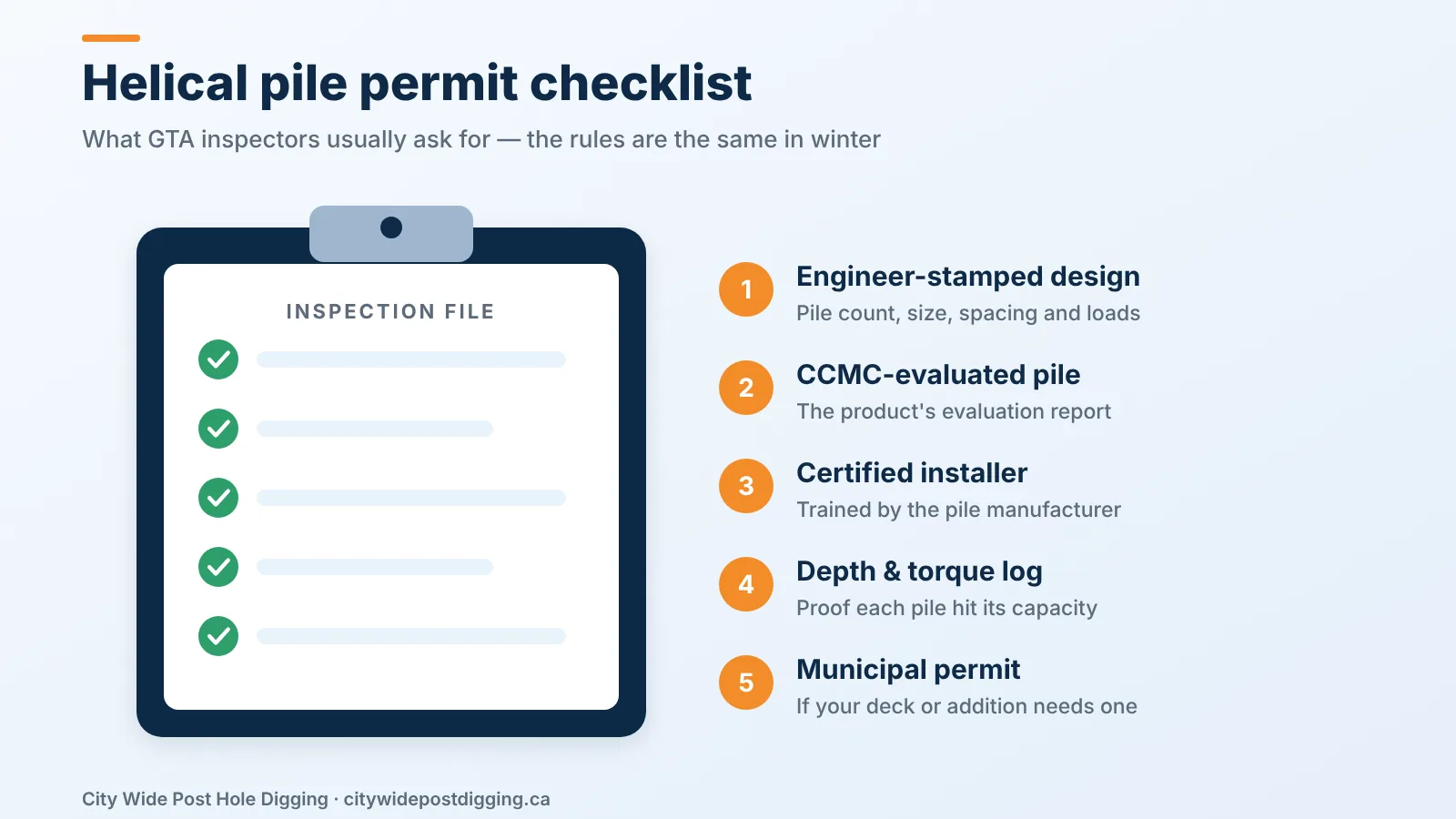
The permit process doesn’t change in winter. Helical piles still need the right paperwork.
- Engineered design. The Canadian Construction Materials Centre (CCMC) says every helical pile project needs a professional engineer’s approval, proper welding, corrosion protection and a certified installer (CCMC bulletin).
- Product evaluation. GTA-area building departments often ask for an engineer-stamped design and the pile’s CCMC evaluation report with a deck permit (for example, Barrie’s deck checklist).
- Installation record. The depth and torque log for each pile shows the inspector that every pile reached its design capacity.
Not every deck needs a permit. Low, freestanding decks are often exempt, but you should always check with Toronto Building or your local municipality.
Projects That Suit a Winter Install
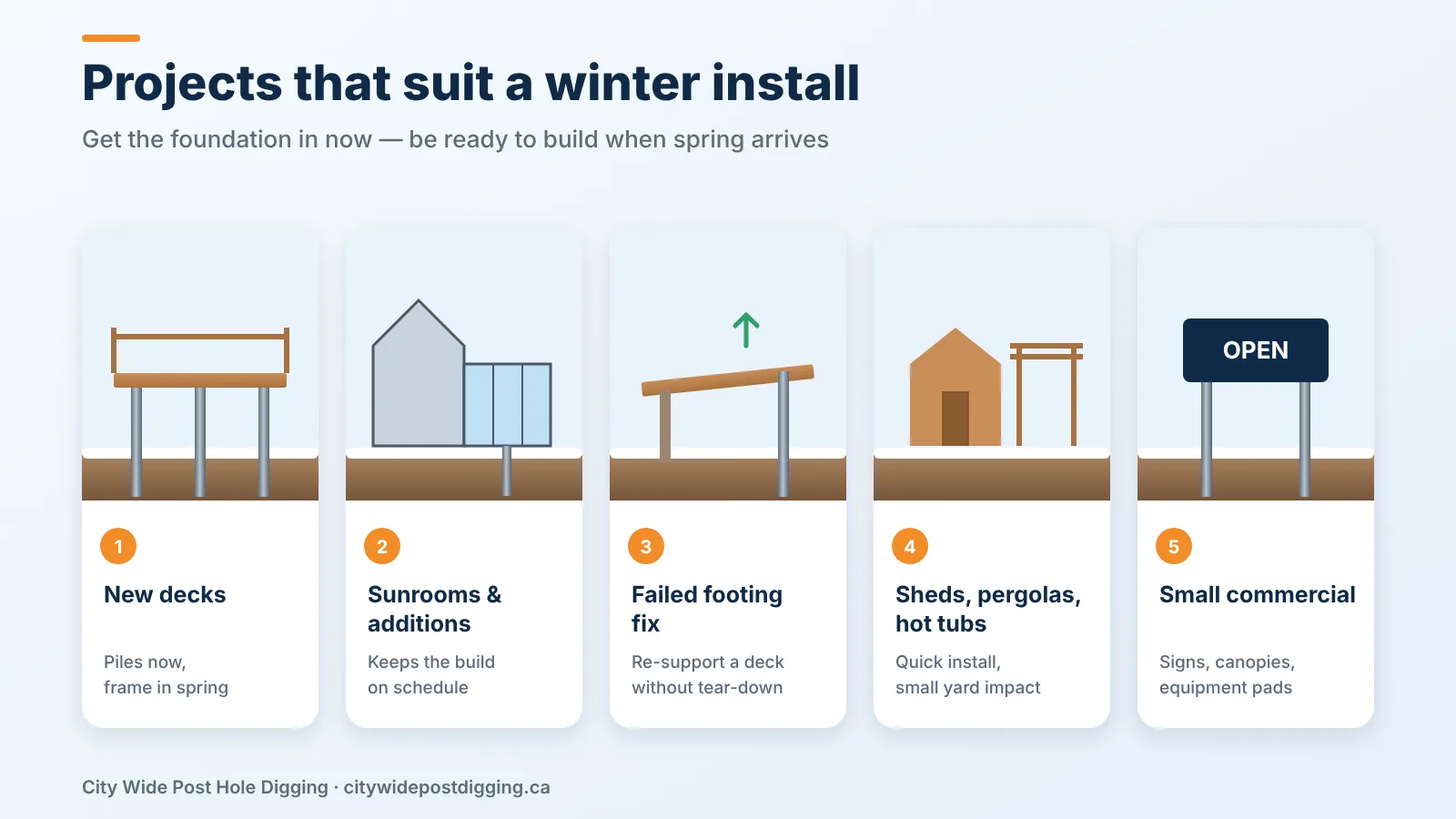
Winter is a smart time to put in the foundation for anything you want ready by spring.
- New decks. Put the piles in over the winter, then frame and finish once it warms up. You’ll be ahead of the spring rush. See our deck building service.
- Sunrooms and small additions. Winter foundation work keeps the build schedule on track.
- Replacing failed footings. A deck that heaved or sank over the winter can often be supported on new piles without tearing it down.
- Sheds, pergolas and hot tub pads. These are quick installs with minimal impact on a snow-covered yard.
- Small commercial jobs. Signs, canopies and equipment pads that can’t wait until spring.
Booking winter work also means shorter wait times. Spring is the busiest season for every foundation crew in the GTA.
Frequently Asked Questions
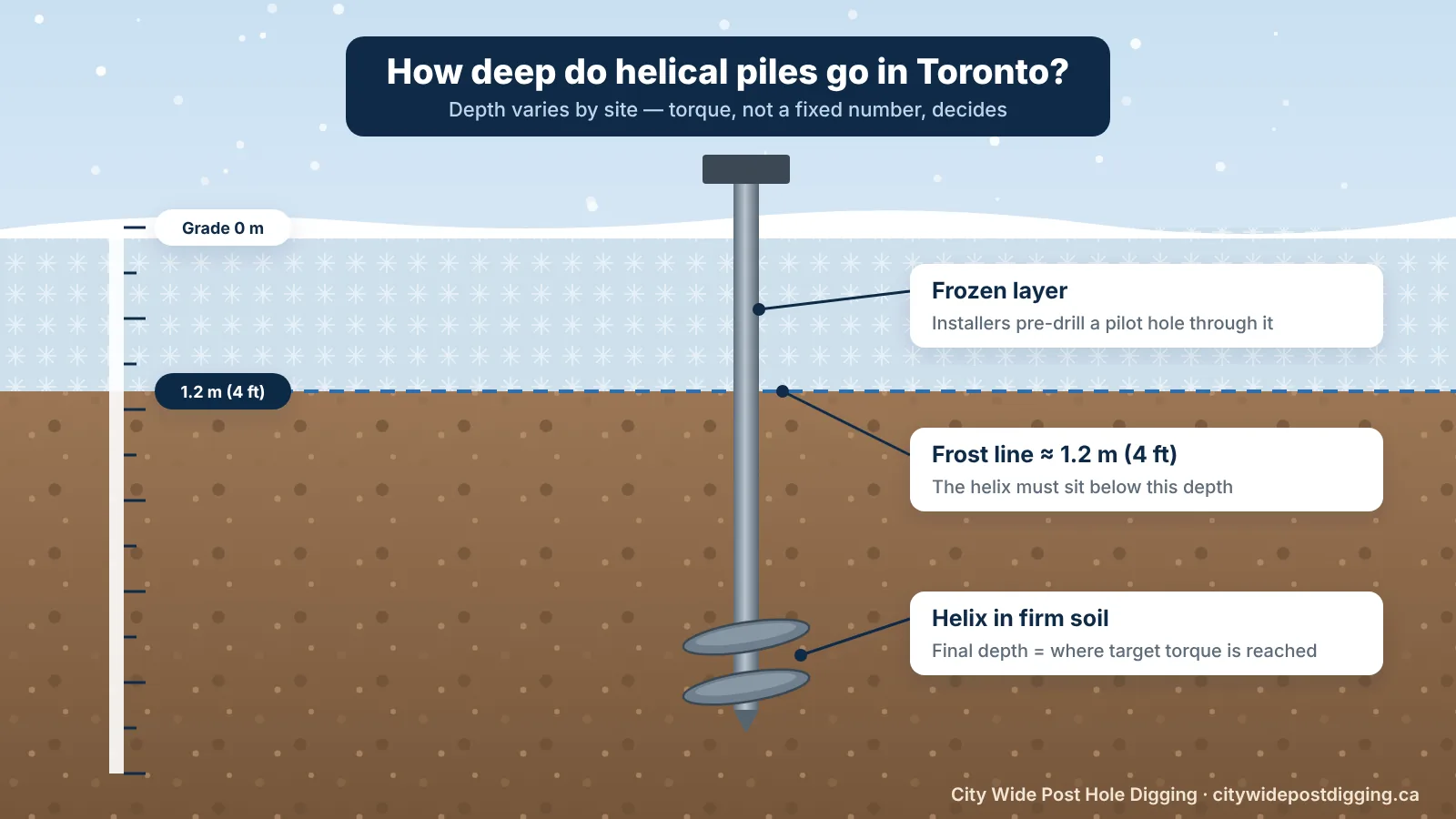
Yes. Installers pre-drill through the frozen top layer, then drive the pile into unfrozen, stable soil below the frost line.
Usually only slightly. Snow clearing and pre-drilling add some time, but there are no heating or curing costs like concrete has.
The helix must sit below the frost line, at least about 1.2 m (4 ft). Most piles go deeper, until they reach the target torque in firm soil.
Yes. Helical piles carry load as soon as they’re installed, so framing can start the same day.
Frost heave is rarely a problem when the helix is below the frost line and the pile is sized correctly. That’s why a proper design and torque record matter.
Permit rules are the same all year. Check with your municipality before installation.
Book Your Winter Helical Pile Installation

Don’t let the cold put your project on hold. City Wide Post Hole Digging installs helical piles across Toronto, North York, Vaughan, Richmond Hill, Markham, Mississauga, Brampton and Durham Region, all year round. Call (416) 721-9971 or request a free quote, and we’ll check your site and give you a clear winter schedule.